
Recent MFSAVoices Newsletters


MFSA News
We Are the Plumbline
A plumbline is a remarkably simple tool: a weight suspended from a line, used by builders to determine whether a wall is straight and true.
For MFSA, the plumbline has long represented something more. It is a way of asking whether the church we are building together actually lines up with what we say we believe.
This October, bishops and leaders from across The United Methodist Church will gather for the Council of Bishops Leadership Gathering to imagine the future of our denomination. The gathering is intended to bring together hope, vision, and imagination for what the UMC might become.
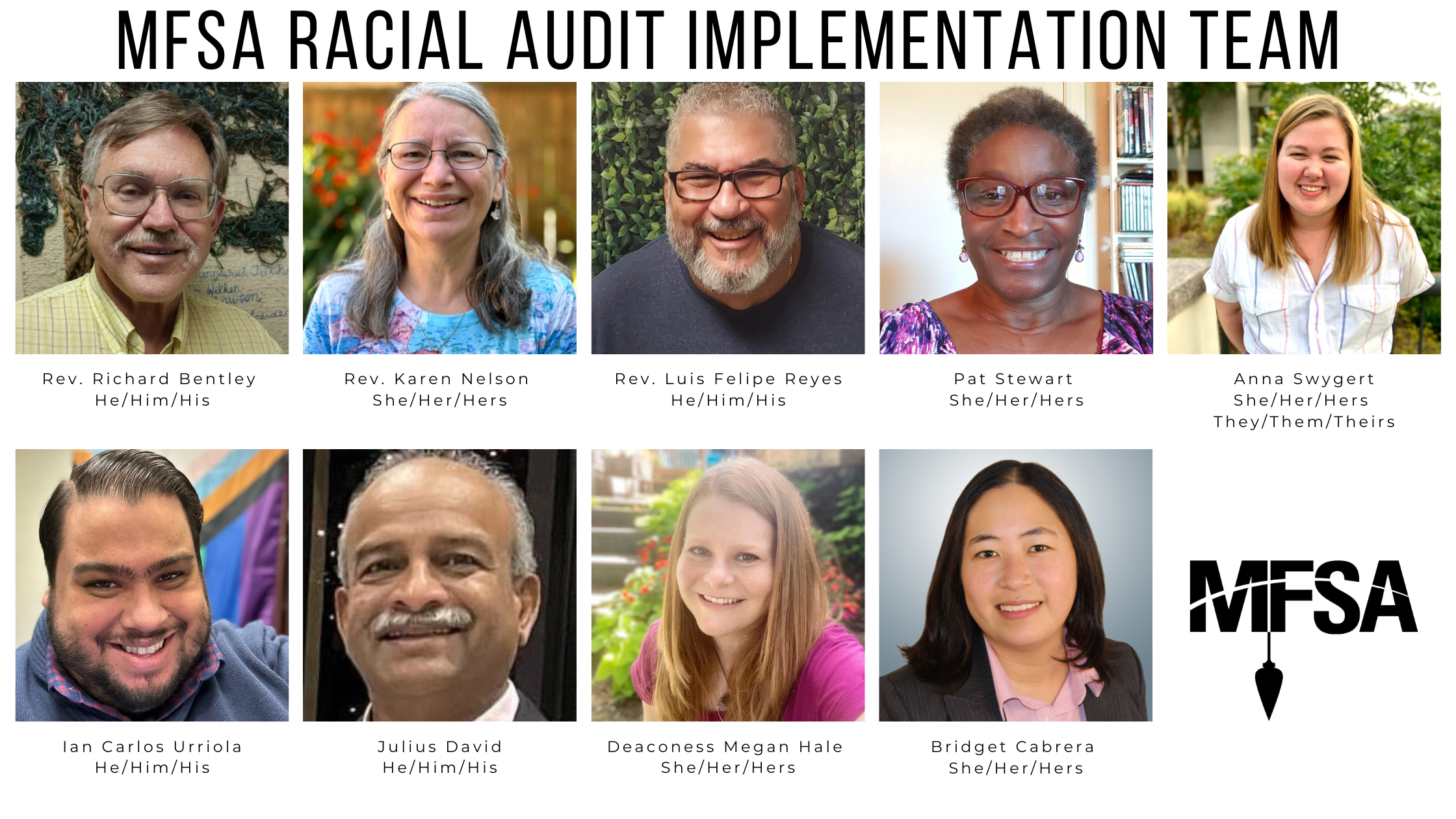
Racial Audit Implementation Team Update - August 2026
One of the most important parts of this work has been the conversations happening within MFSA's Racial Audit Implementation Team. These have not always been easy conversations, nor should they be. We have been asked to sit with uncomfortable truths, to listen to experiences that challenge our assumptions, and to examine not only what MFSA hopes and intends to be, but how our structures and practices have done harm. We have had to ask difficult questions about power, accountability, investment, leadership, and what it means to move beyond a commitment to racial justice toward an organization that is in real, mutually-accountable relationships with people of color communities. The following is my attempt to share some of what I have been learning through these conversations, the tensions and questions I continue to carry, and what I believe this moment of truth-telling and transformation is asking of us as an organization.
As a member of the original Racial Audit Task Force, I learned a lot about the history of MFSA. I studied documents, read interviews with those involved in the past, and helped conduct a survey of current participants.

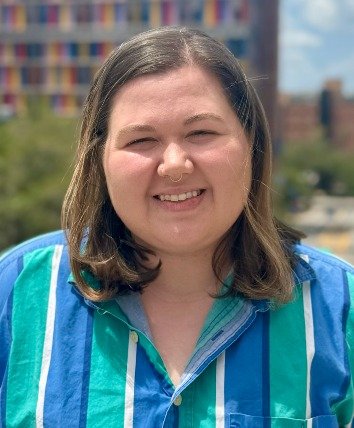
Why MFSA Matters to Me
I joined MFSA leadership in the summer of 2022 after a particularly hard annual conference for the Florida Conference. Our entire commissioning class was voted down for the inclusion of openly-queer candidates for provisional membership, and the conference was unprepared for the trauma, the trust erosion, and bridge building that would need to ensue over the next months and years. I found myself at a stand-still place, weighing the difficulties of continuing in pursuit of ordination as a queer person in the Southeastern Jurisdiction and the need for intersectional justice and radical inclusion in our United Methodist communities. I stepped into MFSA with hope for a countercultural movement that could lay the foundation for the conversations necessary for our Florida Conference to engage with in pursuit of the beloved community.
Faith Turned Into Direct Action
As an immigrant female clergy, I have always felt drawn to spaces that advocate for people from the margins and causes of justice. I was drawn to MFSA because of its fearless, intersectional approach to advocacy. Seeing the organization actively stand on the right side of history—whether through LGBTQIA+ inclusion, care for the earth and its resources or reproductive justice—spoke directly to my faith. What cemented my involvement was our witnessing at General Conference, advocating for a eco-justice, and speaking out for racial justice. I believe the work of MFSA is desperately needed today, to counter oppressive ideologies in the church and world.
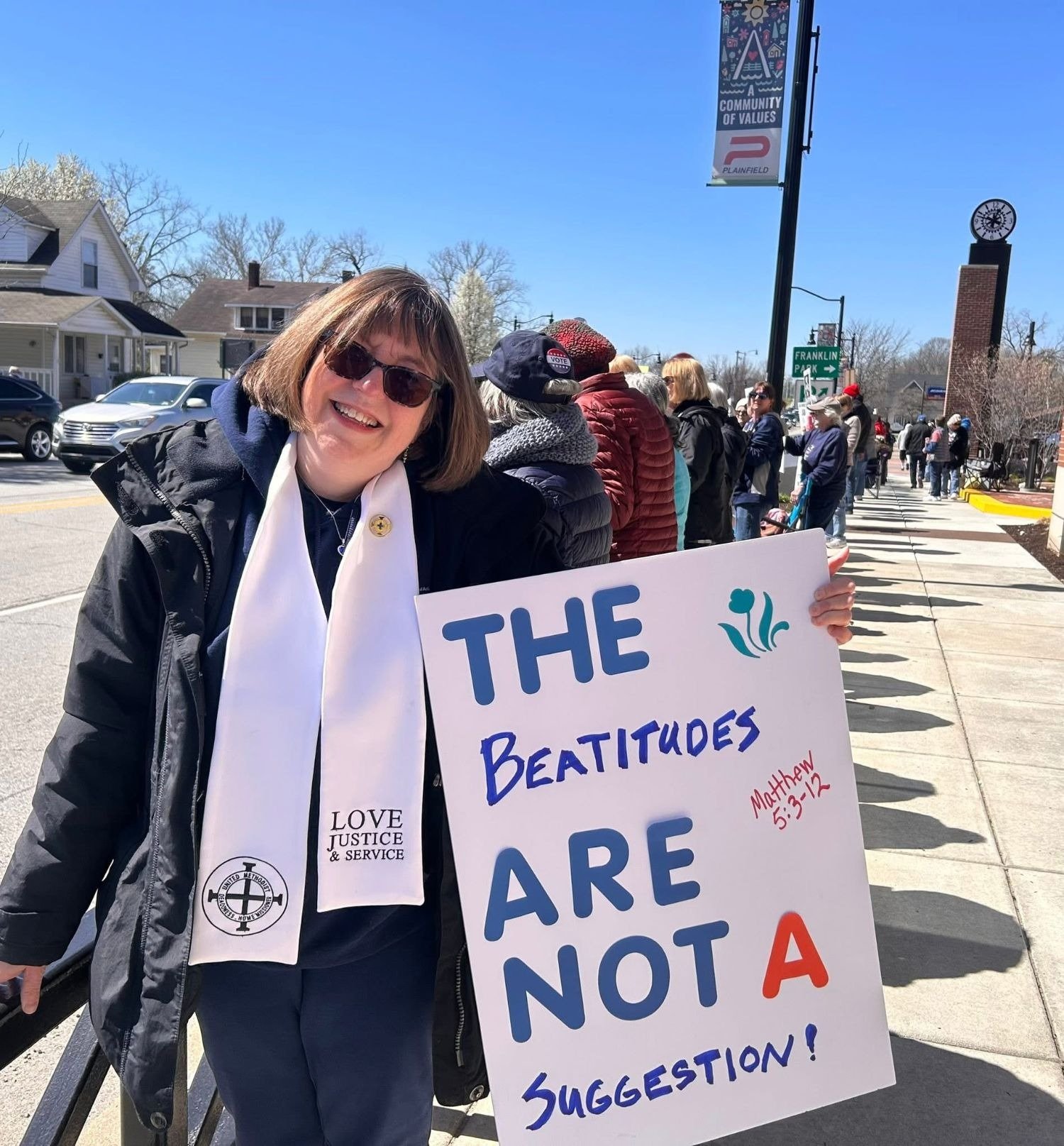
Finding Community in the Work of Justice
The Methodist Federation for Social Action provides a home for those of us who care deeply about the most marginalized members of the world. My belief is that Jesus calls me to love, include and empower the most marginalized in the kin-dom of God, and my commitment as a UMC Deaconess calls me to love, justice and service.
Our Role in Building Up a New Church
As United Methodists prepare to gather for Annual Conference, many of us at MFSA are asking what it means to rebuild—our churches, our witness, and our shared life together—in a time of change.
In the Book of Amos, the prophet describes a vision of a plumb line—a simple tool used to test whether a wall is straight and true. It’s a striking image, a clear measure of what is aligned and what is not.
Carrying MFSA’s Spirit Forward
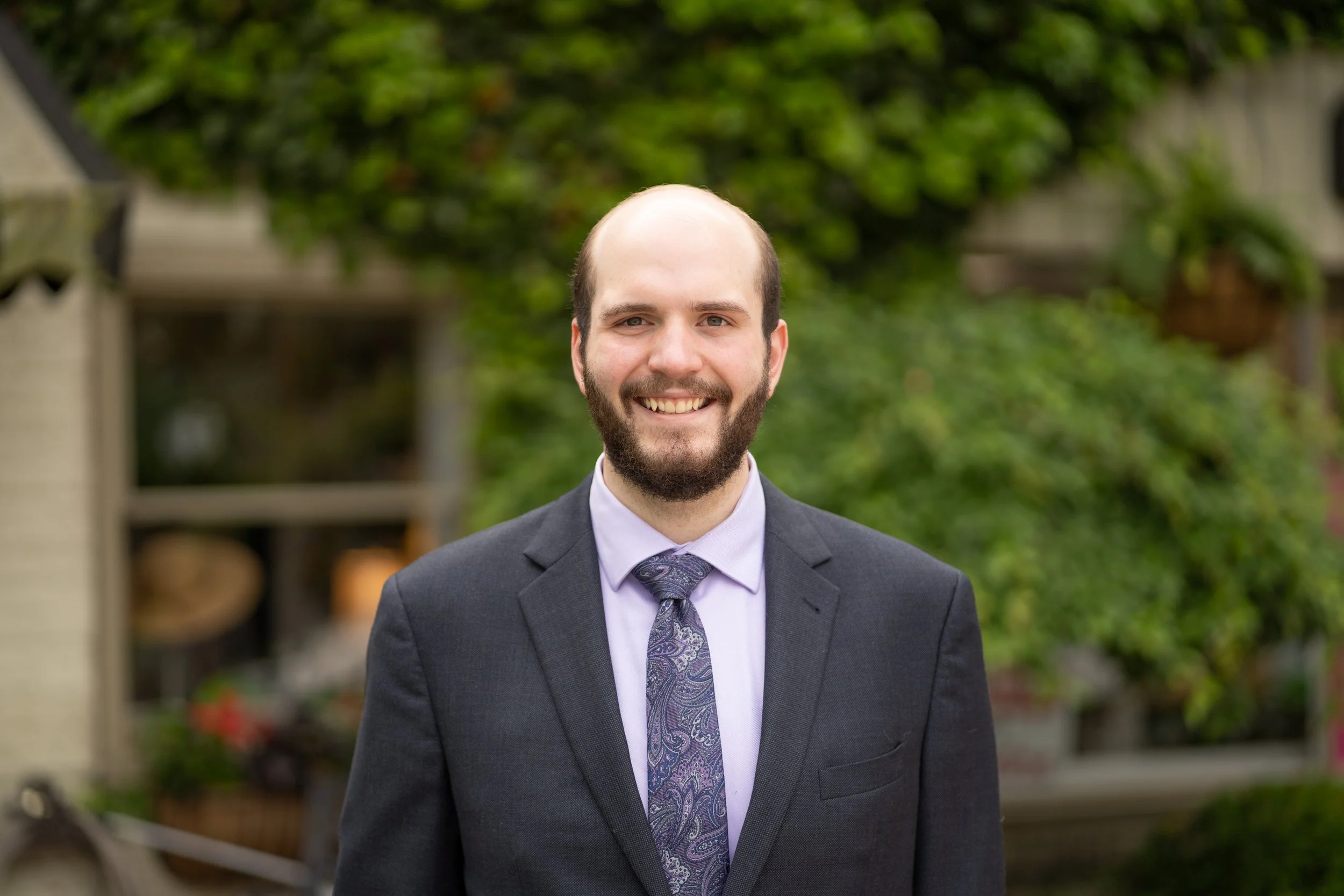
As I conclude my time with the Methodist Federation for Social Action, I find myself filled with gratitude for the journey I’ve shared with this incredible community of Justice-Seeking People. From the very beginning, MFSA has been a collaborative space for learning, reflection, and encouragement. I have seen the outcomes of faith and justice meet in action.
Continuing to Serve and Grow: My MFSA Internship Journey
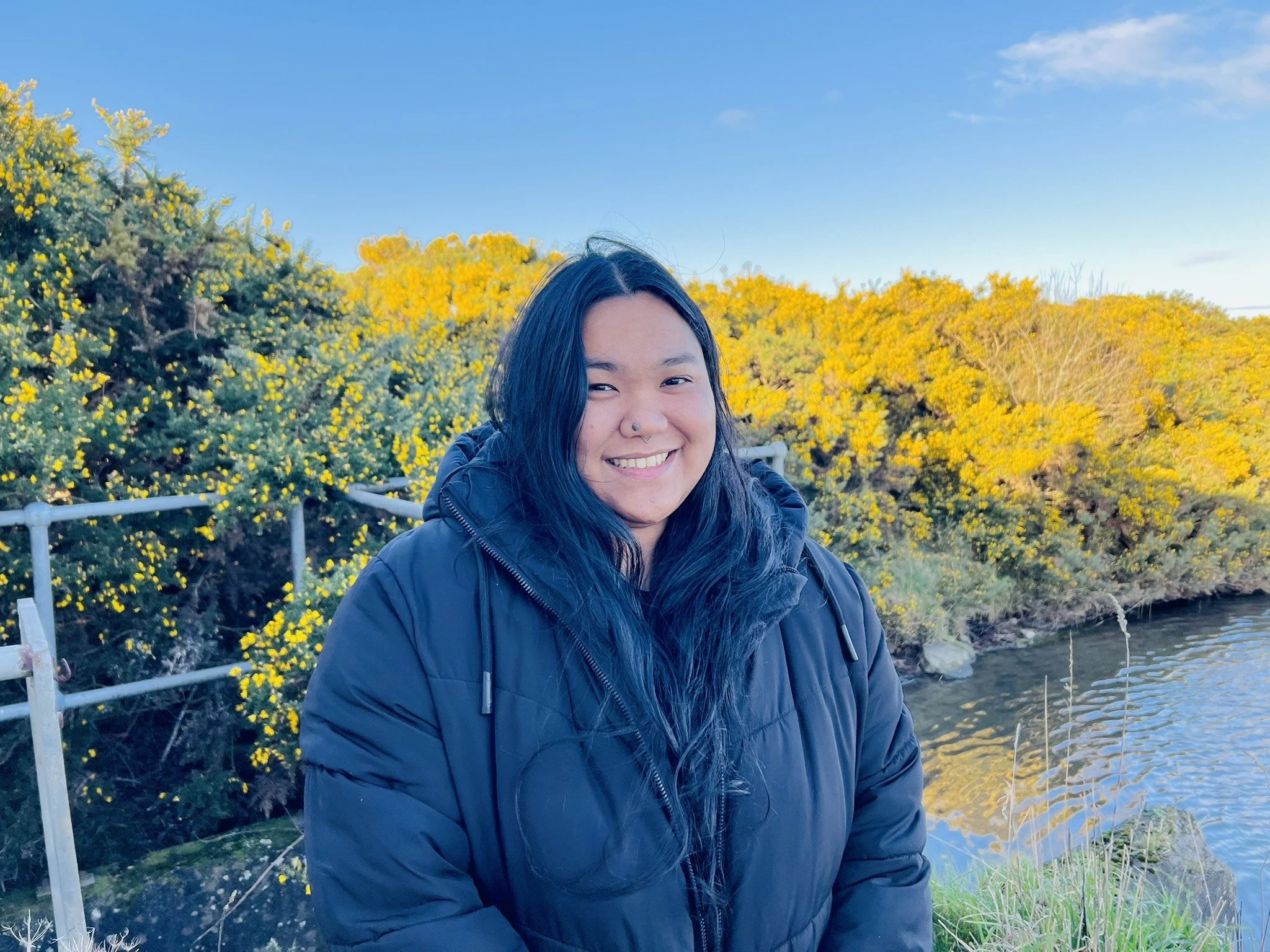
As I continued my internship with the Methodist Federation for Social Action (MFSA) this Spring semester, I can truly say that I have grown in ways I did not expect. Looking back at where I started, I was unsure of myself and still adjusting to the challenges of an online internship. But now, I feel more confident not only in what I can do, but also in who I am becoming.
This semester, I became more comfortable and open with my supervisor. I wholeheartedly participated in my weekly supervision meetings, sharing things about my studies, and I was also able to understand more deeply the importance of the work of MFSA and how it continues to stand for justice, human rights, and the dignity of all people through our open conversations. I found myself not just listening, but also reflecting and connecting with new learnings to my own faith and experiences. It made me realize that social action is not just something we study, but something we live out.

MFSA Action Opportunity: Stop ICE Overreach & Restore Human Dignity
The United Methodist Social Principles affirm the inherent dignity of every person, the right to seek asylum, and the fundamental humanity of migrants and refugees. They call us to support immigration policies that are humane, just, and rooted in the recognition that every person bears the image of God. Current enforcement practices violate these principles at every turn.
MFSA Racial Audit Team Expansion
In June 2023, the Methodist Federation for Social Action Board of Directors took a clear step forward by creating the Racial Audit Implementation Team. This team was formed in response to the findings of MFSA’s racial audit, with a shared goal: to help reshape the organization so that equity and justice are not just values we name, but practices we live out—within MFSA, across the church, and in the world around us.
Since then, this team has been doing the steady, often behind-the-scenes work of implementing the Racial Audit's recommendations. Originally composed of seven members, the team has been guiding how these recommendations take root in real structures, relationships, and decisions. Now, that work is growing.
Learning to Serve Even from Afar: My MFSA Online Internship Experience
My internship with the Methodist Federation for Social Action (MFSA) was a meaningful experience even though it was done online. At first, I was unsure if I would really learn much since everything was done through Zoom meetings, but I later realized that learning and service can still happen in an online setting.
During my internship, I attended Zoom meetings that focused on what MFSA does with their local chapters or the churches they work with. Through these meetings, I learned how MFSA partners with churches in addressing social issues such as human rights, poverty, and justice. These discussions helped me understand how the church can stand with communities who are facing different struggles.

A Good Friday Prayer of Lament and Courage
God who hears our cries,
Today we sit with the weight of the cross.
We remember what happens when truth is silenced,
when power protects itself,
when the vulnerable are cast aside.
We remember that Jesus was executed by a system that feared what love could change.
A Maundy Thursday Prayer of Shared Table and Love in Action
God of shared tables and open doors,
On this night, we remember a meal—
simple, ordinary, and full of meaning.
Jesus gathered with friends,
knowing what was coming,
and chose love anyway.
He washed feet.
He broke bread.
He said, "Just as I have loved you, you also should love one another."
Is Your Sanctuary a Den?
Holy Monday brings us into one of the most unsettling moments of Holy Week.
Jesus enters the Temple and overturns the tables of the money changers, crying out, “My house shall be called a house of prayer—but you are making it a den of robbers.”
Many of us hear that phrase and imagine the Temple as a place where wrongdoing was actively happening. But biblical scholar Dr. Amy-Jill Levine reminds us that a den is not where robbers rob people. A den is where they go afterward. It is the place where they feel safe, protected, sheltered from consequences. A den is a hideout.
Which makes Jesus’ words even more unsettling.
He is not simply accusing people of wrongdoing in the Temple. He is accusing the religious system of becoming a safe place for people who do harm.
Hosanna Is a Crowd Song
This coming Sunday is Palm Sunday, and on Palm Sunday, Jesus doesn’t enter Jerusalem alone.
Yes, he’s riding on a donkey, humble and unarmed. But he is surrounded. A crowd gathers. People spread cloaks on the road. Branches are cut and waved. Voices rise together, crying out, “Hosanna! Save us!” And when Jesus enters the city, the whole place is stirred up. Folks keep asking, “Who is this?”
Palm Sunday isn’t a solo act of courage by Jesus. It’s a collective moment in the movement of ordinary folks who decide, together, to show up, to take a risk, to make a way for love, and to demand a new and just way.
The crowd matters.
When Truth Stands Accused
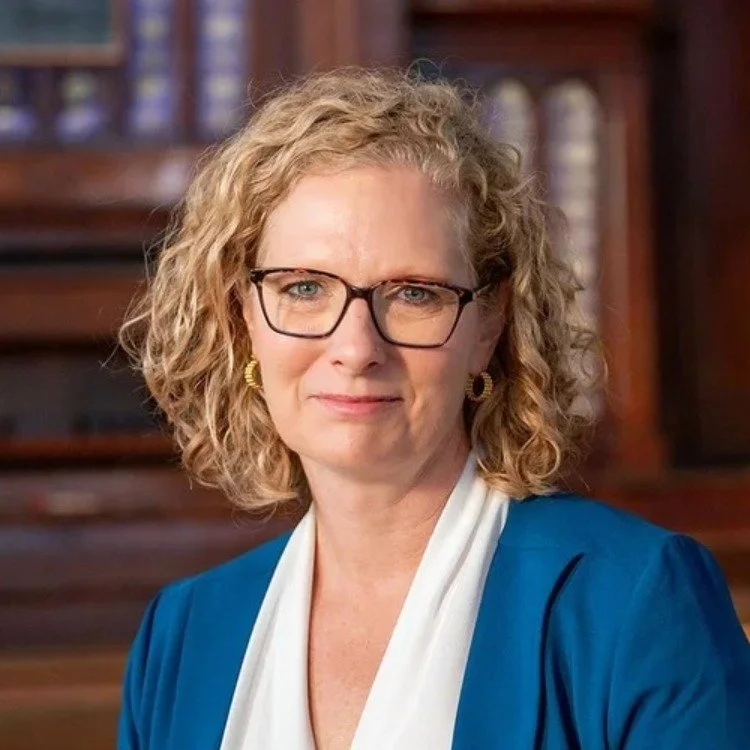
Rev. Rachel Cornwell invites us into the trial of Jesus before Pilate, asking hard questions about truth, power, and where real authority comes from. Filmed in a public space shaped by our own justice system, her reflection connects the gospel story to the courage required to speak truth in the face of unjust power—and to live that truth together.
A Public Witness for Peace Following the U.S. and Israeli Strikes in Iran
Methodist Federation for Social Action grieves the devastating loss of life following the recent military strikes carried out by the United States and Israel in Iran, as well as the retaliatory violence that has followed. Civilians—children, families, workers, and elders—are again paying the highest price for decisions made by governments and militaries. Every life lost is sacred, and every act of war deepens the suffering of people who did not choose this conflict.
As a movement rooted in the Gospel’s call to justice, MFSA rejects the logic that violence will create peace. The teachings of Jesus point us in another direction—toward courage, mercy, and the hard work of peacemaking. War does not liberate people from oppression, nor does it bring lasting security. It multiplies trauma, destabilizes communities, and endangers countless lives across the region and beyond.
“How Long, O Lord?”
When I was in seminary and doing a pastoral internship at the Hollywood United Methodist Church, I was invited by one of the church members to spend a night on the streets with her. She was chronically unhoused, and she was willing to be my teacher and guide.
I was not brave enough to take her up on her offer.
It terrified me.
It wasn’t even that I was scared for my safety, I had confidence in her knowledge and care. It was that I couldn’t get past the fear that if I left the secure bubble of my life for one single night, it might burst and I’d never be able to get back to it. It was irrational, ridiculous, and unfounded. I couldn’t move past it.
When the Breeze Won’t Let Us Stay the Same
Witness a sacred meeting
under the cover of darkness.
Honest conversation flows.
Murmurs of curiosity and confusion rise up,
punctuated by inflections
of questions answered by questions.
Do you hear the breeze
that stirs up the familiar scent
of punitive earthly laws?
Is there another way?
Possibilities emerge
during divine encounters.
The atmosphere shifts.
Winds of change refresh creation with
showers of restorative justice.
Will you resist transformation
like a wailing newborn
yearning for comfort of the womb?
Or will you taste the sweet fruit
of God’s liberating love for the whole world
to be born again through saving grace?