
The Things that Make for Peace, More than the Absence of Conflict
Advent Devotion by Rev. Gary Doupe
They have treated the wound of my people carelessly,
saying, “Peace, peace,” when there is no peace.
Jeremiah 6:14
I have found that deeds of caring make a far better "creed" than pious words. Recently I saw this anecdote from Martin Buber posted on Facebook by an Episcopal church in California. I shared it on my own page:
A rabbi was asked by one of his students “Why did God create atheists?” After a long pause, the rabbi finally responded … “God created atheists to teach us the most important lesson of them all – the lesson of true compassion. You see, when an atheist performs an act of charity, visits someone who is sick, helps someone in need, and cares for the world, he is not doing so because of some religious teaching. He does not believe that God commanded him to perform this act.
In fact, he does not believe in God at all, so his actions are based on his sense of morality. Look at the kindness he bestows on others simply because he feels it to be right. When someone reaches out to you for help you should never say ‘I’ll pray that God will help you.’ Instead, for that moment, you should become an atheist – imagine there is no God who could help, and say ‘I will help you’.” - Martin Buber
For many of us believers, two kinds of reality confront us in this Advent season: the seeming darkness and despair of an increasingly violent world and the belief that darkness must and will give way to light.
The season of Advent during dark December challenges Christians (especially those of us in cold northern climates) to remember we are alive for a purpose and to be vigilant through the darkest times, in particular for those who are suffering.
These seasonal thoughts are bringing Palestine to my mind more vividly than any previous time of my life. I ponder the terrifying darkness that has beset the Palestinian people. The horrors that plague Gaza call me - and hopefully all of us - to deepest self-examination. Events in Gaza force us to see the potent existence of a modern, human-made hell, bringing judgment on those who seek to ignore or deny it.
The beleaguered Palestinians of Gaza are joined in their suffering by Palestinians in the West Bank, living under siege and experiencing the worst ethnic cleansing in decades, with daily attacks from Israel’s military forces and rampaging vigilante citizens. Throughout the territory controlled by the Israeli government the racist and deadly apartheid regime becomes more extreme and more frightening.
In the face of the desperate needs we see in that troubled land, we may cry out, “Where is God?”
To answer that, we need look no further than our own hearts and heads, hands and feet. It is not just for the man in a ditch that we are called to be the Good Samaritan. Our neighbor might not just be a different nationality or religion; they may not be within sight.
As Martin Buber would have it, when we are faced with the suffering and violence and injustice we see today at home and abroad, may we become like the atheist: imagine there is no God and step forward to do whatever we can to stop the destruction and bring healing.
But we do have an advantage over the atheist, if we claim it: a faith that sees beyond immediate circumstances and nurtures hope of success when reason may tell us our efforts are doomed to fail. The birth narratives of Matthew and Luke are moving and memorable. They remind us how simply and directly the mystery of God’s love can enter human hearts and lives. They inspire us to persist in the privileged task of being light-bearers and justice-seekers in the darkest of times, such times as we are seeing now at home and abroad.
The noted theologian and civil rights leader Howard Thurman, grandson of a slave and mentor to Martin Luther King Jr., famously noted that Christmas becomes real “when the song of the angels is stilled” and the shepherds and the magi have gone home. Then “The work of Christmas begins: to find the lost, to heal the broken, to feed the hungry, to release the prisoner, to rebuild the nations, to bring peace among others…”
That is not just a catalog of good acts; it is a cumulative list. As Thurman understood, all of those things – including healing the broken, releasing the prisoners, and rebuilding the nations – are prerequisites to “bring peace among others.”
The Rev. Dr. Martin Luther King, Jr. taught us well that “True peace is not merely the absence of violence. It is the presence of justice.” We also receive that truth from the prophet Jeremiah in 6:14; as would-be peacemakers, we dare not neglect terrible wounds that God’s people have suffered and attempt to declare a condition of Peace that is not real.
There is much in the news now about a “ceasefire” in Gaza as well as a “peace plan” engineered by the U.S. government and approved by the United Nations.
I am deeply relieved that Israel’s bombs have mostly ceased to fall on Gaza, but I also see that there is no actual ceasefire and the killing of Palestinians continues daily, albeit now in hundreds per month rather than thousands. I give thanks that some food and water is reaching the starving masses of Gaza, realizing it is nothing close to what is needed and was promised.
I see the same political leaders who enabled and executed the genocide in Gaza being credited with a ceasefire that does not exist and a peace plan that includes no concern for Palestinians’ rights, no thought of securing justice for a deeply wounded and oppressed people.
As Rev. Dr Munther Isaac, pastor, author, and one of the most prominent Palestinian Christian voices today, wrote in Sojourners magazine in October:
“I cannot pretend that this ceasefire, or the so-called “peace” plan that follows it, represents anything close to justice..."
“What politicians are selling to the world is not peace; it is submission. It is the illusion of peace; it is a coercive peace where the powerful impose their will, dictate terms, and call it “stability.” There is no mention of justice, no acknowledgment of war crimes, and no talk of reparations or accountability..."
“…truth must be spoken plainly. A ceasefire is not peace. A pause in the killing, while apartheid continues, is not peace. A plan that ignores justice and accountability is not peace...
“Real peace begins with the recognition of historic injustice—with naming what has been done to the Palestinian people for more than 75 years: ethnic cleansing, dispossession, and apartheid. Without truth, there can be no reconciliation. Without justice, peace will always be an illusion.”
In this Advent week for Peace, may we pierce through the façade of false peace. In our longing and prayers for a world at peace, let us invest ourselves in the healing values of justice, accountability, reparations, and reconciliation, practicing them in collaboration with others, and bringing our faith and values into the political sphere.
As practitioners of a global gospel, we need not be defensive about our politics. Our scripture is a manual for the politics of Jesus, who viewed ALL people as inherently and inexpressibly valuable. We speak and act in the confidence of love, respect, and knowledge as we labor in our society for the justice that can usher us to peace.
Professor Mazin Qumsiyeh of Bethlehem University reminds us that during the 750,000 years of human habitation in the Fertile Crescent/Palestine, notable conflict has taken place only 1% to 2% of the time. As he writes, “violence is not endemic. It is not inevitable in the human condition.” I would add: it is also not inevitable for the people of Palestine/Israel.
In the midst of winter’s darkness, Christmas brings us Emmanuel. God has come to dwell with us. Therefore, during this Advent season and hereafter:
Let us relentlessly nurture our faith and our hope for true peace, within ourselves and in our society, refusing the temptations of apathy and despair.
Let us claim God’s justice and peace as our natural habitat, remembering they are inextricably entwined.
Let us embrace the opportunity to labor together in building the Beloved Community for ourselves and our neighbors, those next door and those beyond our horizon.
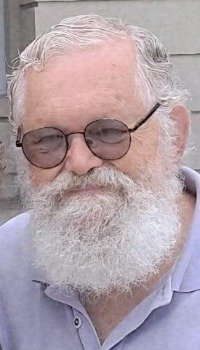
Rev. Gary Doupe
Rev. Gary Doupe authored this Advent reflection in collaboration with friends in United Methodists for Kairos Response (UMKR). Gary is a member of MFSA and an activist for Palestinian rights with UMKR. He has served for many years on the Task Force for Palestine-Israel in the Upper New York Annual Conference, and he has visited Palestine/Israel several times, most recently in May of this year.