
Is Your Sanctuary a Den?
Lent Devotion by Rev. Andy Oliver
Allendale United Methodist Church
Matthew 21:12–13
Holy Monday brings us into one of the most unsettling moments of Holy Week.
Jesus enters the Temple and overturns the tables of the money changers, crying out, “My house shall be called a house of prayer—but you are making it a den of robbers.”
Many of us hear that phrase and imagine the Temple as a place where wrongdoing was actively happening. But biblical scholar Dr. Amy-Jill Levine reminds us that a den is not where robbers rob people. A den is where they go afterward. It is the place where they feel safe, protected, sheltered from consequences. A den is a hideout.
Which makes Jesus’ words even more unsettling.
He is not simply accusing people of wrongdoing in the Temple. He is accusing the religious system of becoming a safe place for people who do harm.
The Temple had become a refuge for exploitation, injustice, and power disguised as piety. The very place meant to draw people closer to God had become a place where harm could hide behind sacred language.
Jesus overturns the tables because the system has become comfortable with what God cannot accept.
Holy Monday invites us to ask a question that is not easy for the church to hear:
Have our sanctuaries ever become dens?
Places where racism hides behind tradition.
Places where economic injustice is ignored in the name of stability.
Places where exclusion is defended as doctrine.
Places where those who harm others are protected while the wounded are asked to stay quiet.
When institutions prioritize reputation over accountability, silence over truth, or comfort over justice, they risk becoming exactly what Jesus condemned—a den.
Jesus overturns tables not to destroy the Temple, but to reclaim it. To make space again for prayer, healing, and the presence of God among the marginalized.
The gospel tells us that immediately after this moment, the people on the margins come to him in the Temple—and he heals them.
When the den is dismantled, healing can begin.
Holy Monday reminds us that faithful discipleship sometimes means asking hard questions about the spaces we love. Not to tear them down, but to ensure they are truly places where justice, mercy, and belonging can flourish.
May our churches never be dens.
May they be places where the vulnerable are protected, where truth is spoken, and where the presence of God makes justice possible.
“God of truth and justice,
Search our institutions and our hearts.
If we have made safe spaces for harm, expose them.
If we have protected comfort more than compassion, overturn our tables.
Cleanse your house again.
Make our communities places of healing, accountability, and prayer.
And give us the courage to follow Christ even when faithfulness disrupts the systems we have grown used to.
Amen.”
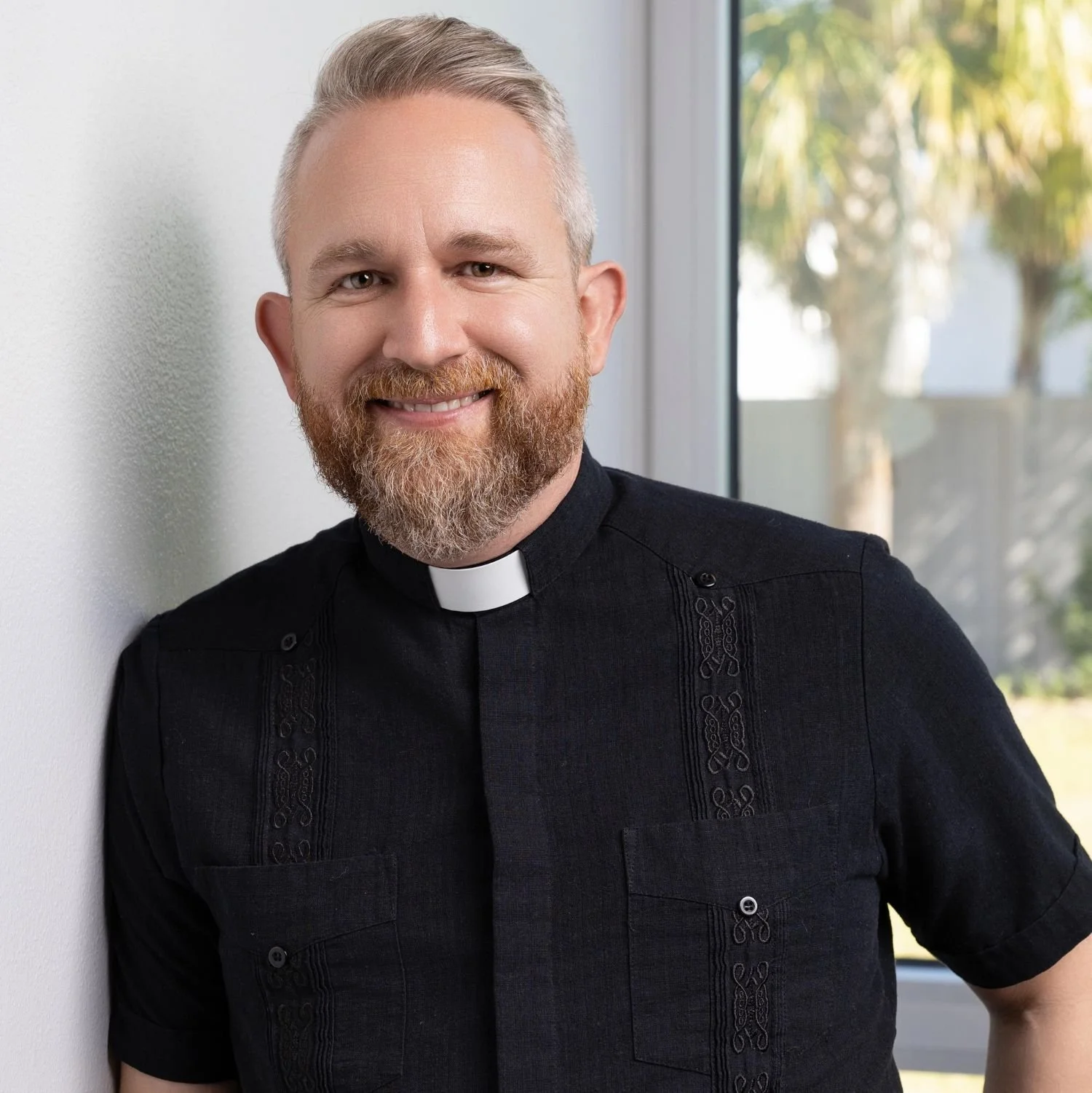
Rev. Andy Oliver (he/him/his)
serves as co-president of the board of directors of the Methodist Federation for Social Action. He is pastor of Allendale United Methodist Church in St. Petersburg, Florida. Since becoming a Reconciling congregation, the church has tripled worship attendance and has become a hub for community organizing in their region. Andy is passionate about the liberation of people through justice work around dismantling white supremacy, immigrant concerns, reproductive justice, LGBTQ liberation, and other issues harming people at the margins. Andy previously served as communications director of Reconciling Ministries Network. He has two young boys Liam and Evan. He attended the University of Florida, Duke Divinity School, and is currently working on a doctor in ministry focused in community organizing from Garrett-Evangelical Theological Seminary.
Allendale United Methodist Church is a justice-seeking, inclusive congregation committed to practicing Christ’s example of unconditional love without exclusion. Allendale affirms the sacred worth of every person and invites people of every race, background, sexual orientation, gender identity, economic situation, age, and ability to participate fully in the life of the church.
Rooted in the belief that all people are God’s beloved, Allendale strives to embody love through acts of grace, advocacy, and community care. As a community of seekers, followers, and doubters, the congregation gathers to grow in faith, support one another, and work for healing, justice, and advocacy in the wider world.